
What Are the Best Inground Pool Finishes?
The three main inground pool finishes are plaster, quartz and exposed aggregate finishes such as pebble. Plaster provides a classic, relatively smooth surface, quartz adds color and aggregate for greater durability, and pebble offers a more textured, natural appearance with strong durability. The best choice depends on your preferred water color, surface texture, pool design, budget and maintenance expectations.
For homeowners in Jacksonville, FL and Northeast Florida, the pool finish is more than a final color choice. It becomes the interior surface you see and feel every time you use the pool and plays a major role in the appearance of the water.
Island Pools helps homeowners throughout Jacksonville, Jacksonville Beach, Atlantic Beach, Neptune Beach, Ponte Vedra Beach, St. Johns, Orange Park, Fleming Island, Duval County, St. Johns County and surrounding Northeast Florida communities choose pool finishes that complement their custom pool design and backyard.
What Is an Inground Pool Finish?
An inground pool finish is the final interior surface applied over the pool shell. It creates the finished appearance of the pool while providing the surface that remains in direct contact with the water.
The finish you select can affect:
- Water color and appearance
- Surface texture underfoot
- Overall pool style
- Durability
- Maintenance requirements
- Project cost
Choosing among different pool finish options should be part of the overall design process so the interior works with the pool’s shape, tile, coping, decking and surrounding outdoor living space.
Island Pools incorporates these material decisions into its custom pool design and construction process for Northeast Florida homeowners.
What Are the Main Types of Inground Pool Finishes?
Homeowners comparing types of pool finishes will generally encounter three major categories: plaster, quartz and exposed aggregate finishes such as pebble.
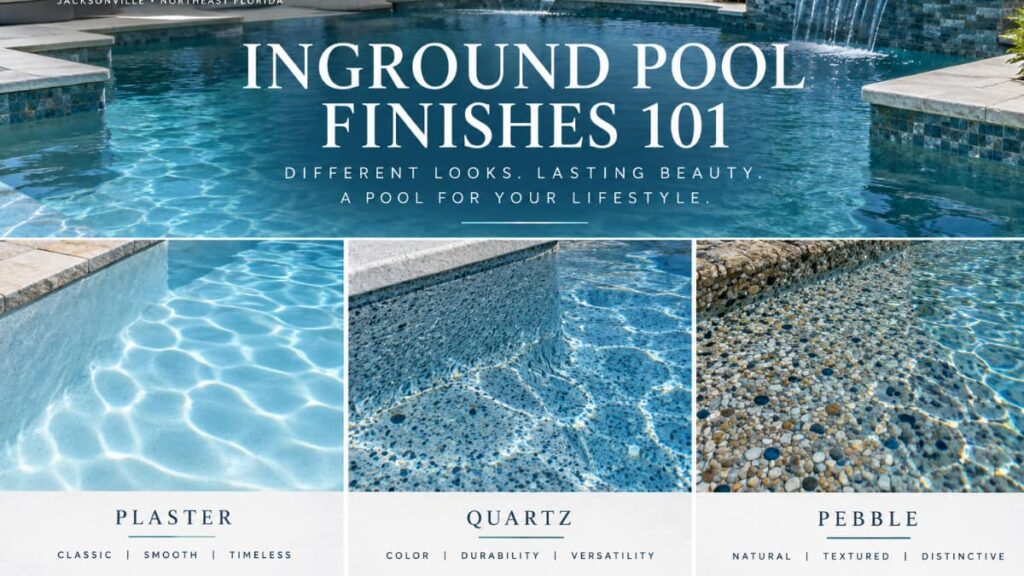
Each provides a different combination of appearance, texture, durability and cost.
Traditional Pool Plaster
Traditional white plaster is the classic choice among pool plaster finishes. It creates a clean, relatively smooth interior and the familiar light-blue water appearance associated with many swimming pools.
Plaster may appeal to homeowners who want:
- A traditional pool appearance
- A relatively smooth surface
- A simple, clean finish
- A more economical finish option
The National Plasterers Council’s pool finish guidance provides additional information about traditional plaster and aggregate pool finishes, including differences in appearance, texture and durability.
Quartz Pool Finishes
A quartz pool finish combines a cementitious base with quartz aggregate. Depending on the product and color selection, quartz can provide more visual depth than traditional plaster while offering a surface that can range from relatively smooth to more textured.
Quartz is available in numerous colors and blends, giving homeowners greater flexibility when coordinating the pool interior with tile, coping and decking.
A quartz finish may be appropriate if you want:
- More color choices
- Added visual depth
- Greater durability than traditional plaster
- A balance between appearance, texture and cost
Pebble and Exposed Aggregate Pool Finishes
Pebble pool finishes use small aggregates embedded within the pool surface to create a textured, natural appearance.
Variations in aggregate size, color and blend allow exposed aggregate finishes to work with a range of pool designs, particularly tropical, resort-inspired and natural backyard settings.
Pebble and other exposed aggregate finishes can provide:
- Strong durability
- Natural visual texture
- Numerous color combinations
- Greater design flexibility
- A distinctive finished appearance
Because exposed aggregate is more textured than traditional plaster, homeowners should consider how the surface feels underfoot as well as how it looks.
Plaster vs. Quartz vs. Pebble Pool Finishes
When comparing plaster vs. quartz vs. pebble pool finishes, the differences primarily involve appearance, texture, durability and cost.
| Pool Finish | Appearance | Texture | Key Consideration |
|---|---|---|---|
| Plaster | Classic and clean | Relatively smooth | Traditional, economical option |
| Quartz | More color and visual depth | Smooth to textured | Balance of aesthetics and durability |
| Pebble | Natural and dimensional | More textured | Durability and distinctive appearance |
There is no single best pool finish for every backyard. The right choice depends on the overall pool design, desired water color, preferred surface feel, budget and expectations for long-term care.
How Does Pool Finish Color Affect Water Color?
Your pool interior finish plays a major role in how the water appears, but the finish alone does not determine the final color.
Lighter finishes generally produce brighter blue or aqua appearances, while darker or more saturated finishes can create deeper blue or lagoon-like tones. Pool depth, sunlight, surrounding materials, landscaping and the sky can also influence how the water looks.
For this reason, a small finish sample should not be viewed as an exact representation of how an entire filled pool will appear.
When choosing a finish, consider it alongside:
- Pool depth
- Waterline tile
- Coping
- Decking
- Landscaping
- Sun exposure
- Overall backyard style
Coordinating these materials helps create a pool and outdoor space that look intentional rather than selecting each element independently.
Which Pool Finish Is Best for a Modern Pool?
Modern pools often pair well with clean, understated swimming pool finishes that complement the architecture of the pool and home.
A geometric pool with straight lines, contemporary tile and large-format decking may work well with a refined gray, blue or neutral interior. A freeform pool surrounded by stone and tropical landscaping may call for a different finish and water color.
The interior should ultimately support the overall design rather than being chosen as a separate element.
Which Pool Finish Works Well for a Resort-Style Pool?
Pebble and other aggregate pool finish options are frequently considered for resort-inspired designs because their texture and color variations can complement natural stone, tropical landscaping and integrated water features.
A resort-style pool might combine an aggregate interior with:
- Tanning ledges
- Spillover spas
- Bubblers
- Waterfalls
- Sheer descents
- Natural stone accents
- Integrated outdoor living areas
Island Pools also designs custom pool water features that can be coordinated with the pool finish and surrounding backyard design.
Should You Choose a Light or Dark Pool Finish?
Both light and dark inground pool finishes can create attractive results, but they produce different visual effects.
Light finishes tend to create a bright, crisp appearance and can make the water look lighter blue or aqua. Darker finishes can produce deeper water tones and a more dramatic look.
Color variation may also be more noticeable with some pigmented cementitious finishes. The National Plasterers Council notes that variations in color and appearance can occur with pool interior finishes.
Consider the overall look you want for the pool rather than expecting the water to maintain one exact shade under every depth, weather and lighting condition.
How Important Is Pool Water Chemistry to the Finish?
Water chemistry is very important to the appearance and longevity of a pool interior finish.
Even a high-quality finish requires appropriate startup procedures and ongoing water chemistry management. Improperly balanced water can contribute to scaling, staining, etching and deterioration of cementitious pool surfaces.
The National Plasterers Council explains how water chemistry affects pool finishes and why maintaining appropriate water balance is important for cementitious surfaces.
Homeowners should follow the startup and ongoing maintenance recommendations for the specific pool finish installed.
When Is the Interior Finish Installed on a New Pool?
The pool interior finish is typically installed near the end of new pool construction after major structural work and other stages of the project have been completed.
For Island Pools projects, the selected interior finish or plaster is applied during one of the final construction stages. The pool can then be filled and prepared for startup and water balancing.
Homeowners planning a new pool can see how the stages fit together in Island Pools’ step-by-step custom pool construction process.
Can You Change the Finish on an Existing Pool?
Yes. An existing pool can often receive a new interior finish as part of a resurfacing or renovation project.
Homeowners may consider a new finish when the existing surface has become rough, stained, cracked or dated, or when they want to update the overall appearance of the pool.
Learn more about pool remodeling and renovation in Jacksonville, FL.
How Do You Choose the Right Inground Pool Finish?
When deciding how to choose an inground pool finish, start with how you want the completed pool to look and feel rather than choosing solely from a small color sample.
Consider:
- Desired water color
- Smooth versus textured feel
- Traditional, modern or resort-style design
- Pool depth and shape
- Tile, coping and decking colors
- Surrounding landscaping
- Durability expectations
- Maintenance requirements
- Overall project budget
For a custom pool in Jacksonville, FL, these choices should work together with the home’s architecture, backyard layout and other outdoor living features.
Frequently Asked Questions About Inground Pool Finishes
What are the three main types of inground pool finishes?
The three main inground pool finishes are traditional plaster, quartz and exposed aggregate finishes such as pebble. They differ in appearance, texture, durability, color choices and cost.
What is the smoothest pool finish?
Traditional plaster generally provides a relatively smooth pool surface. Some quartz and polished aggregate finishes can also provide a smoother feel depending on the product and installation.
Is quartz better than plaster for a pool?
Quartz offers greater durability and more color and texture choices than traditional plaster, while plaster provides a classic, relatively smooth appearance and is generally a more economical option. The better choice depends on your priorities and pool design.
Is a pebble pool finish rough?
A pebble pool finish is generally more textured than traditional plaster. The exact feel depends on the aggregate size, product and finishing technique.
Does pool finish determine water color?
The pool finish strongly influences perceived water color, but it is not the only factor. Pool depth, sunlight, surrounding materials, landscaping and weather conditions can also change how the water appears.
What is the best pool finish for Jacksonville, Florida?
There is no single best pool finish for Jacksonville, FL. Plaster, quartz and pebble can all be appropriate depending on the desired water color, surface texture, pool design, budget and maintenance expectations.
Explore Inground Pool Finishes for Your Jacksonville Pool
Choosing the right inground pool finishes is an important part of creating a custom pool that fits your home, backyard and design preferences.
Island Pools designs and builds custom inground pools throughout Jacksonville, Jacksonville Beach, Atlantic Beach, Neptune Beach, Ponte Vedra Beach, St. Johns, Orange Park, Fleming Island, Duval County, St. Johns County and surrounding Northeast Florida communities.
From the interior finish and water color to tile, coping, decking and water features, each selection can be coordinated as part of the overall pool design.
Start planning your custom inground pool with Island Pools and explore the pool finish options that fit your Northeast Florida backyard.